Business systems and technology for Australian businesses

Call 1300 540 271
HPCR home
HPCR home
Case study: booking and operations platform

A transfer business, run from one platform

How HPCR rebuilt the system behind Sunshine Coast Private Transfers: pricing, bookings, scheduling, driver and customer portals, communications, invoicing and driver payouts in one place. The owner estimates it removes several days of manual administration each week.
Client
Sunshine Coast Private Transfers
Industry
Private vehicle transfers
Delivered
Complete booking and operations platform, website and ecommerce
Headline result
The owner estimates the system removes several days of manual administration each week

The platform in operation

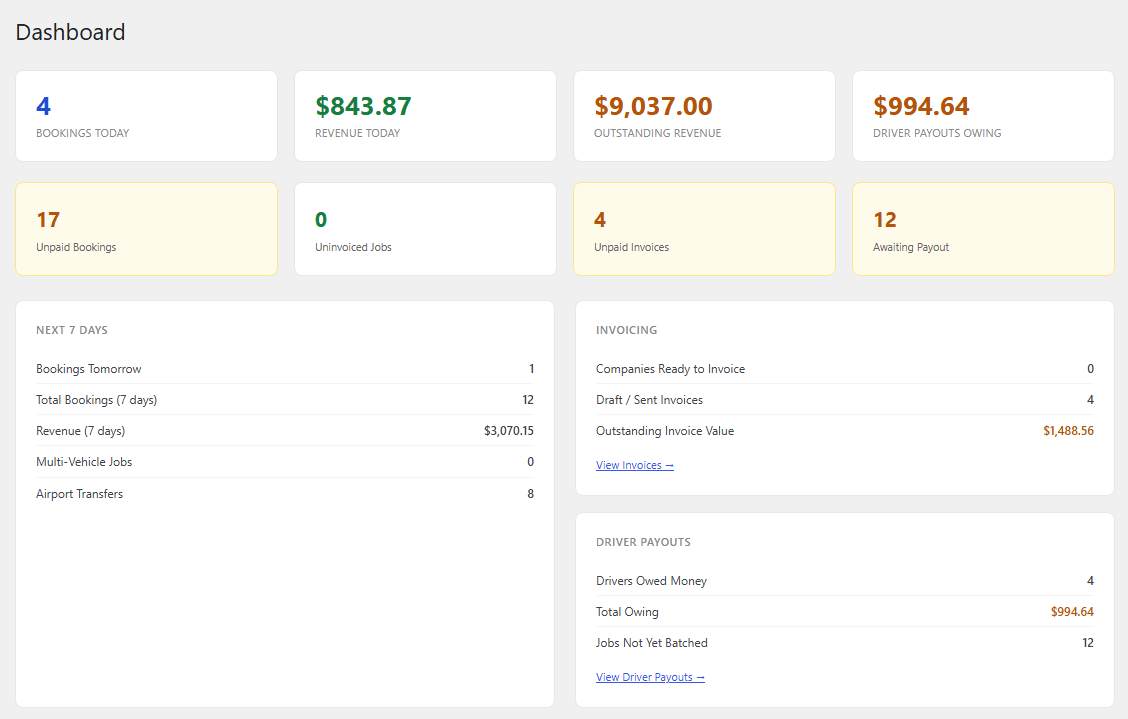
One platform runs the business. The owner works from the operations dashboard: today's bookings, the next seven days, invoicing and driver payouts in one view. Drivers work from their own portal instead of calls and texts. Customers help themselves to bookings, changes and rebooking, and business account clients receive proper invoices.
BUILT BY HPCR
ONE PLATFORM, THREE VIEWS
MANAGEMENT
Transfer operations dashboard showing bookings, revenue, invoicing and driver payout panels with seeded demonstration data
The operations dashboard: today, the next seven days, invoicing and driver payouts. Seeded demonstration data.
Business account customers recognised and invoiced from the dashboard
Driver payouts calculated per job, visible per week
DRIVERS
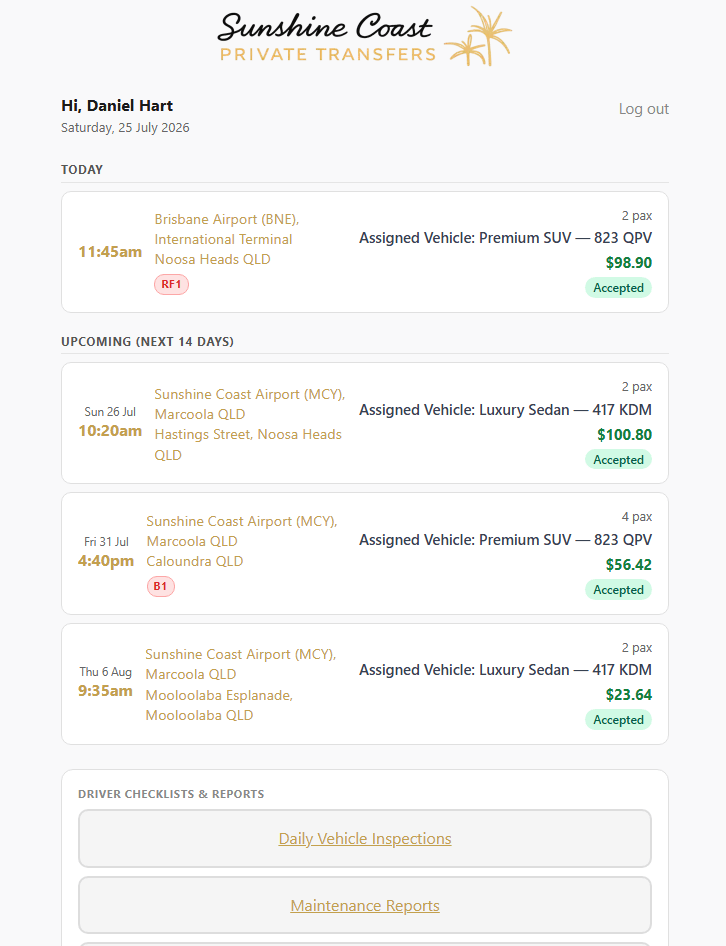
Driver portal listing today's and upcoming assigned jobs with vehicles and payouts, seeded demonstration data
The driver portal: each driver's runs, times and details
CUSTOMERS
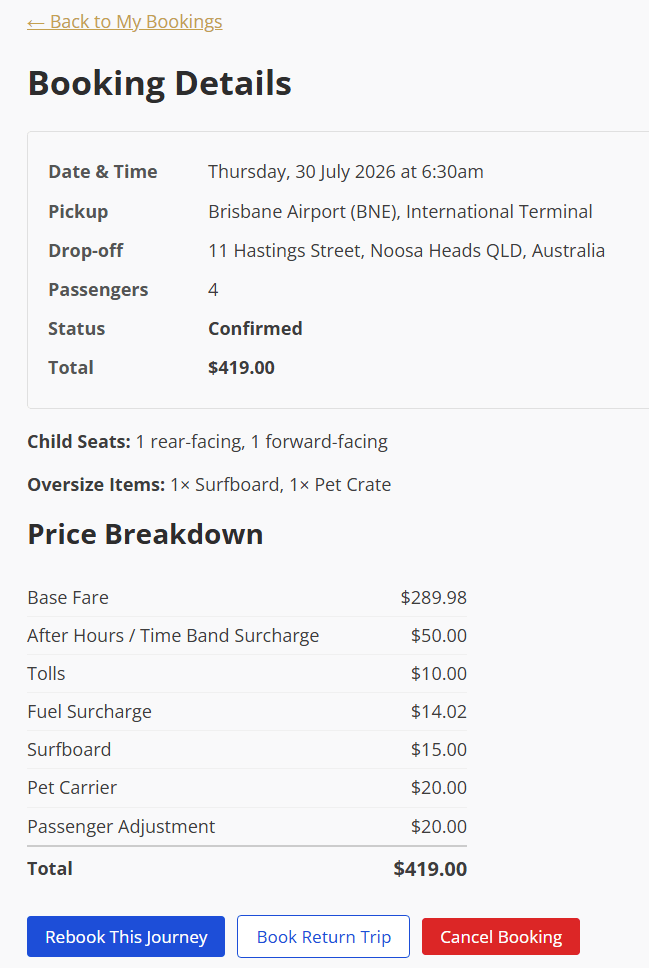
Customer booking details with route, child seats, oversize items, itemised price breakdown and rebook, return and cancel actions
The customer portal: upcoming trips and self-service
The driver accepts the job and works from the job sheet
The customer manages the booking without a phone call
Communications trigger automatically as the booking moves

What the business previously relied on

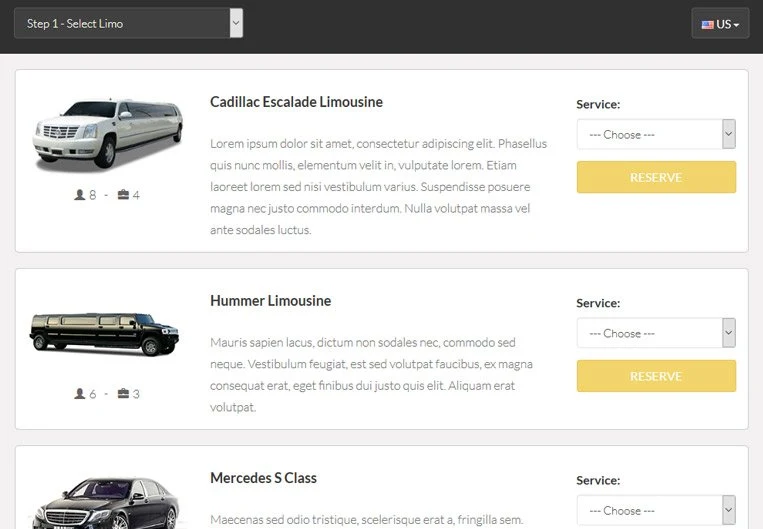
A private transfer operation is a moving puzzle. Every trip has its own route, time, vehicle and price; vehicles and drivers have to be in the right place, customers expect confirmations and updates, corporate clients expect invoices, drivers need to be paid for the right jobs, and the phone rings through all of it. Before the rebuild, that machinery ran on the owner's attention around an older, heavily customised off-the-shelf booking package: quotes, schedules, driver instructions, reminders and invoices handled manually, with the detail living across phone calls, spreadsheets, email and memory. The package's dated interface and its dependence on custom modifications meant every change was a maintenance job rather than a configuration.
The visible need was a better booking experience on the website. HPCR identified that the real project was owner independence: a platform the operator manages the business through, not around. Price a trip once, and everything downstream, scheduling, driver instructions, customer communication, invoicing and payouts, follows from that single entry without the owner carrying it by hand.

BEFORE HPCR
Old website with no clear call to action.
PHPJabbers booking platform used as the foundation of the previous system. The client's installation was heavily customised and remained on an older version.
THE VISIBLE COST
Hours every week retyping, confirming and chasing.
THE QUIETER COST
A flight time missed, a reminder not sent, a driver working from an out-of-date text message. Both grew with every booking, so the busier the business became, the harder it worked against itself.

Pricing and booking

Dynamic pricing calculates each trip from distance, travel time, vehicle and the other variables that matter, so quotes are instant and consistent. Online booking takes card payment in the flow, and business customers are recognised and placed on account, invoiced later without retyping.
BUILT BY HPCR
THE NEW WEBSITE AND BOOKING JOURNEY
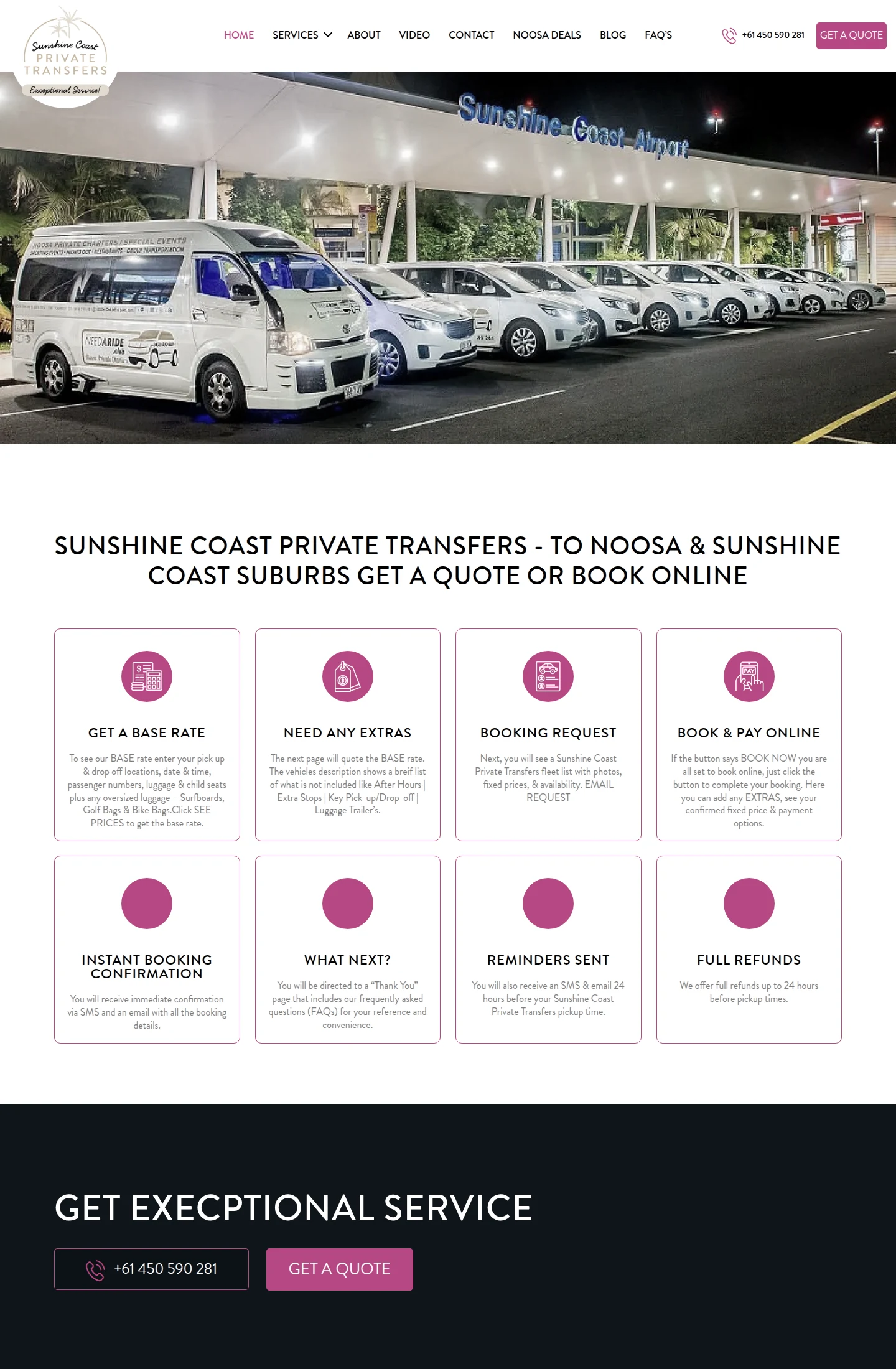
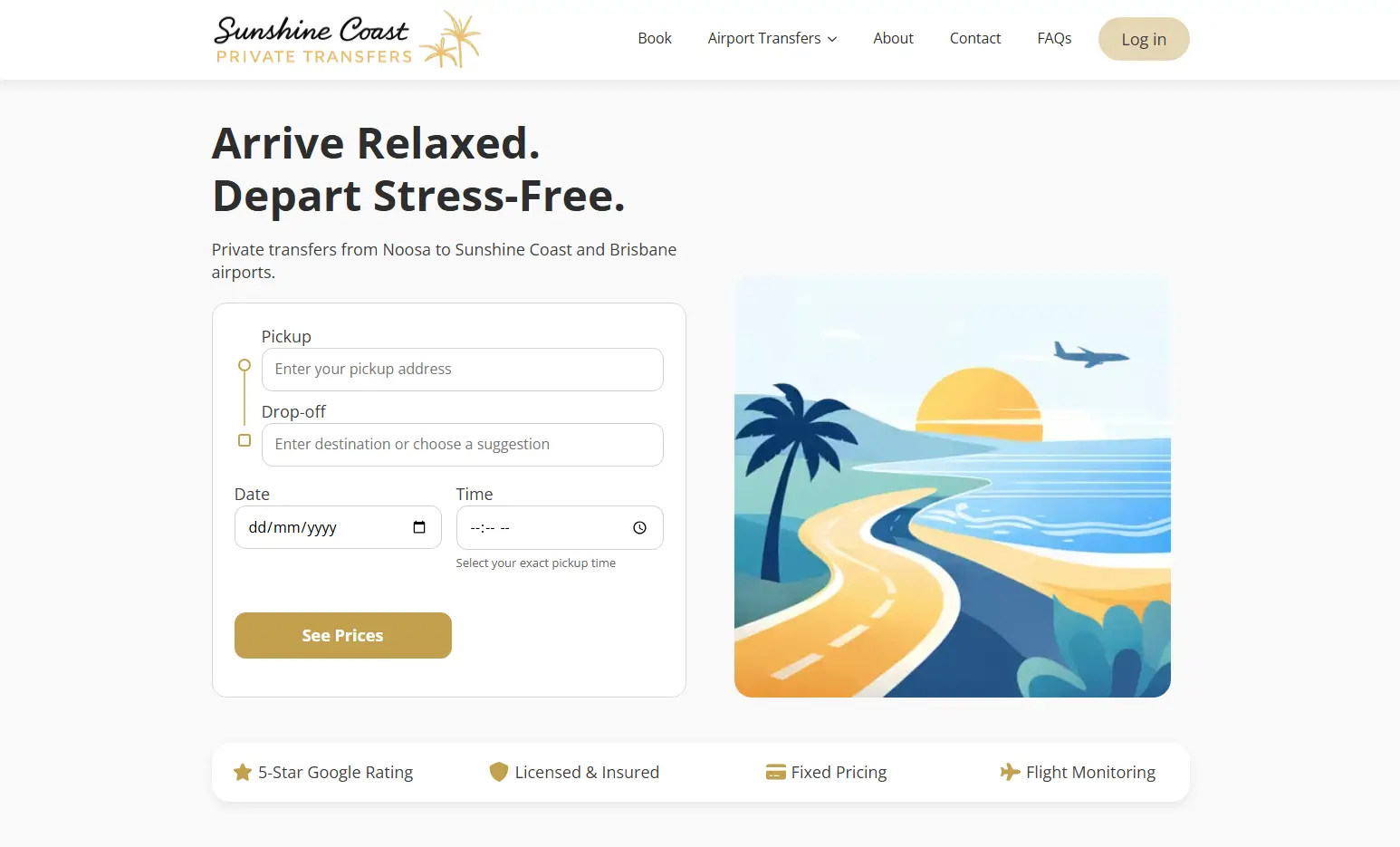
Sunshine Coast Private Transfers website with instant booking widget
The new website built by HPCR, with the quote widget front and centre
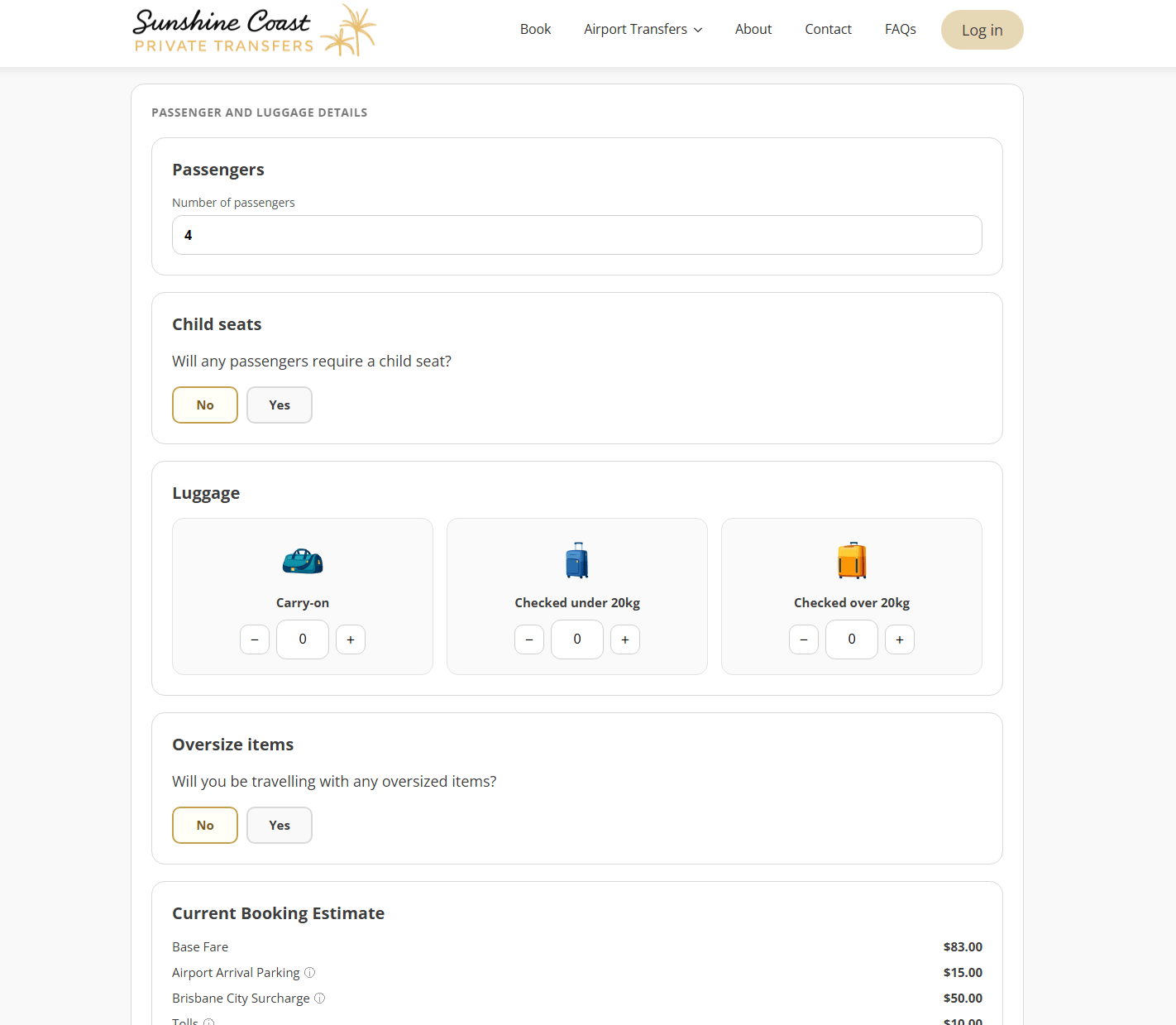
Booking flow step showing passengers, luggage and a live fare estimate
The new booking journey: passenger, luggage and pricing steps with a live fare estimate
The fare estimate updates live as passenger, luggage and vehicle details change
Rates and rules are configured by the operator, without a developer
An account customer is recognised at booking and invoiced later, without retyping

Scheduling and driver workflow

Vehicle and driver scheduling makes the fleet and the day's runs visible, with clashes caught before they happen. Each driver works from a portal that carries their runs, times, flight details and notes, with payouts calculated per job.
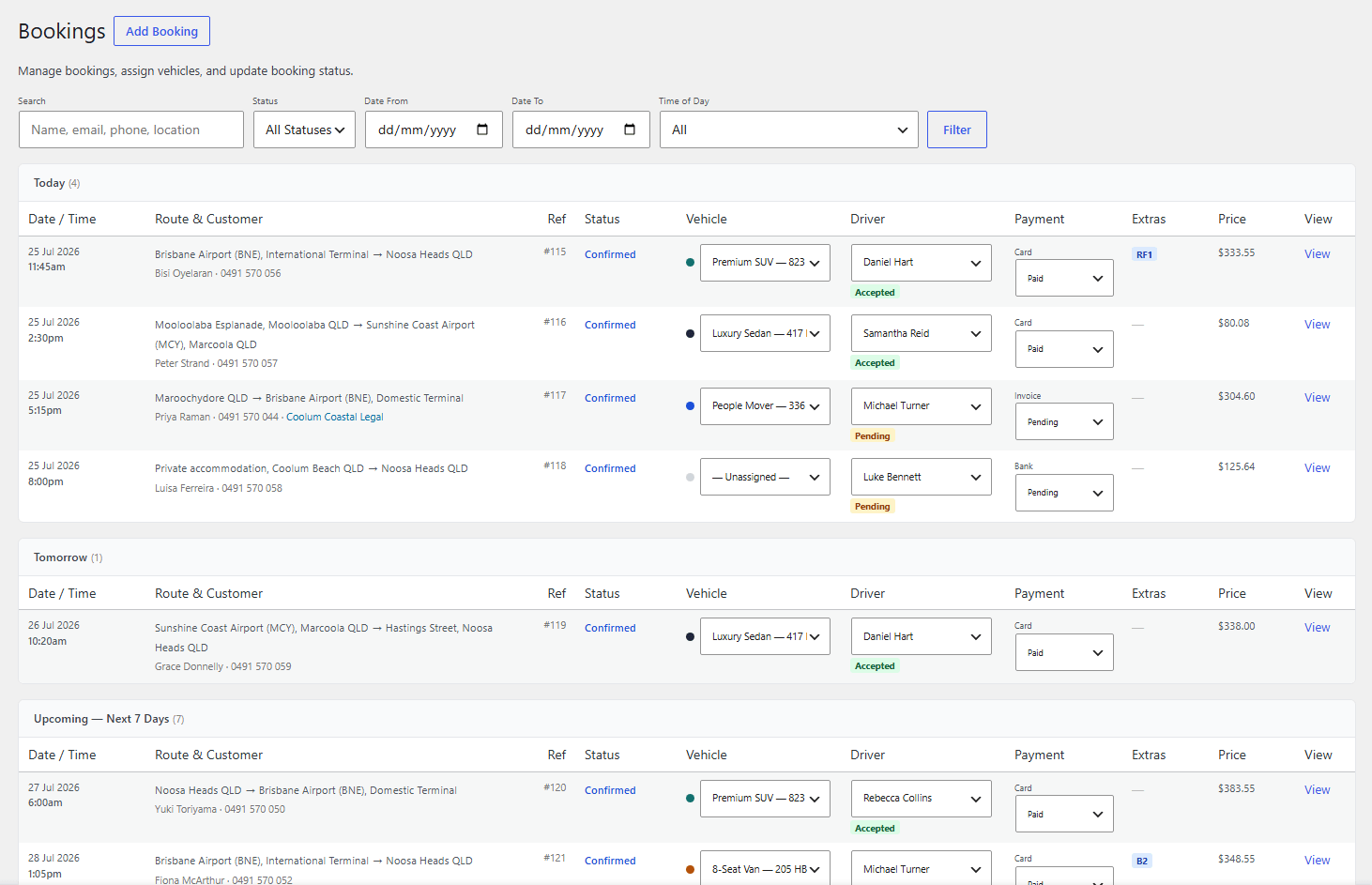
Bookings management table with filters, statuses, vehicle and driver assignment and payments, seeded demonstration data
The bookings table: filters, statuses, payments, vehicle and driver assignment. Seeded demonstration data.
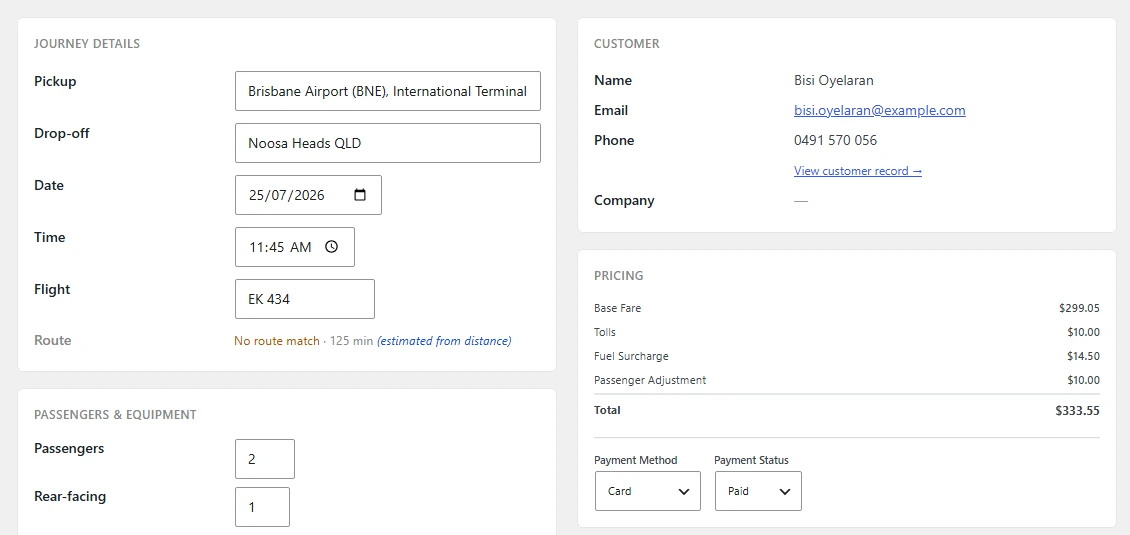
Individual booking screen showing journey details, customer record and itemised pricing, seeded demonstration data
Inside one booking: journey, customer and itemised pricing
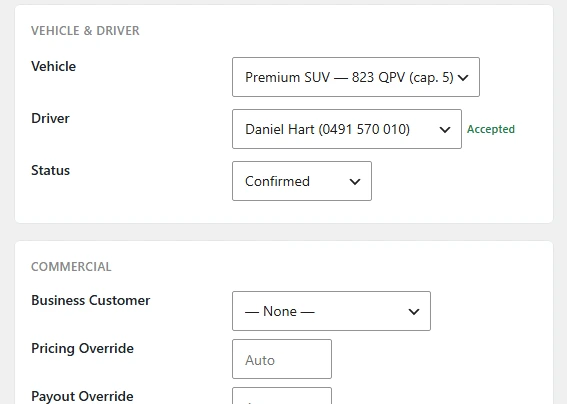
Booking controls for vehicle, driver, status, business customer and pricing overrides
Vehicle, driver and commercial controls
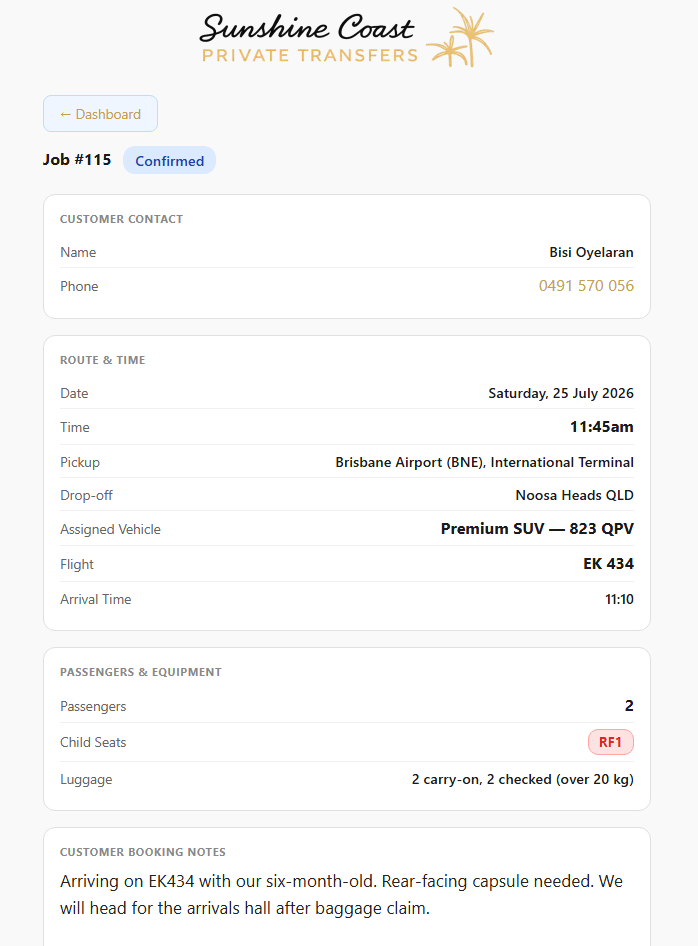
Driver job view with customer contact, route, assigned vehicle, flight, passengers, luggage and booking notes, seeded demonstration data
A driver's job sheet: route, flight, vehicle and notes
The vehicle is reserved automatically when the booking is scheduled
Scheduling conflicts are caught at assignment, not on the day
The driver accepts the job and works from this sheet

Customer self-service

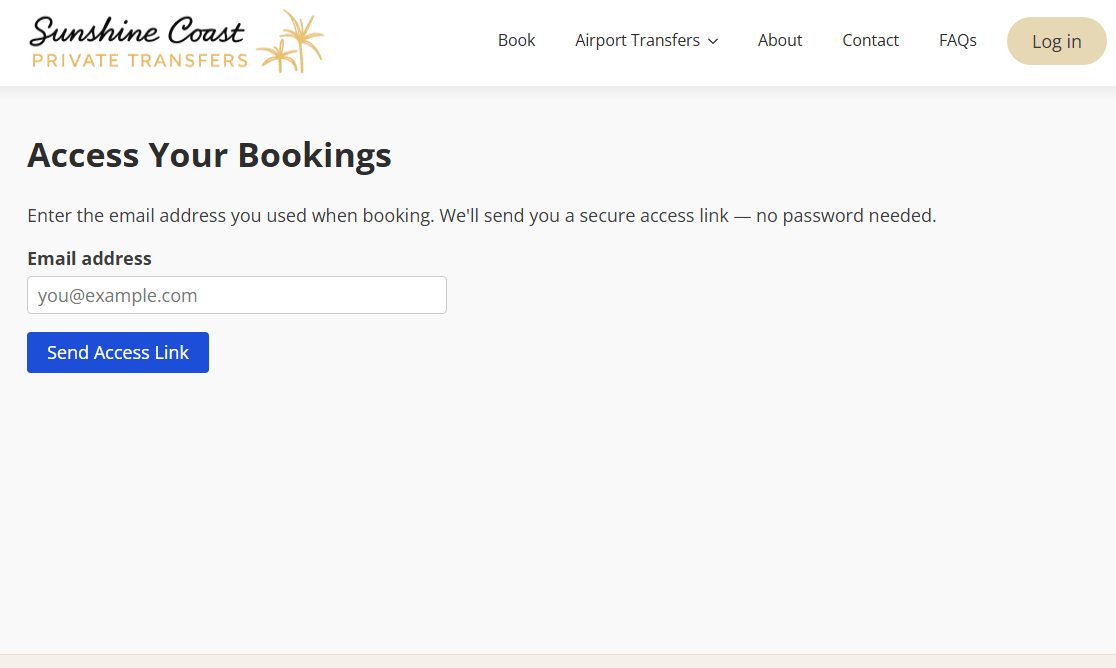
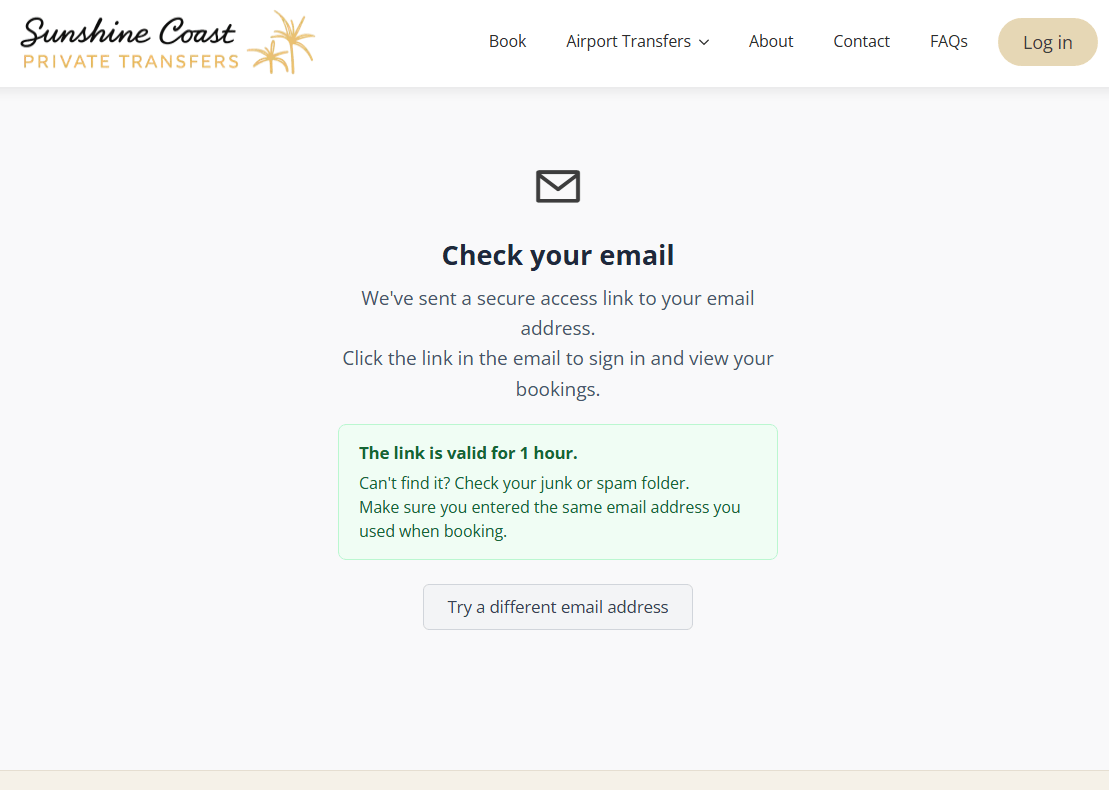
Customers manage their own bookings through a portal with passwordless access: they request a secure sign-in link with their booking email and manage upcoming and past trips themselves, including the changes that used to require a phone call.
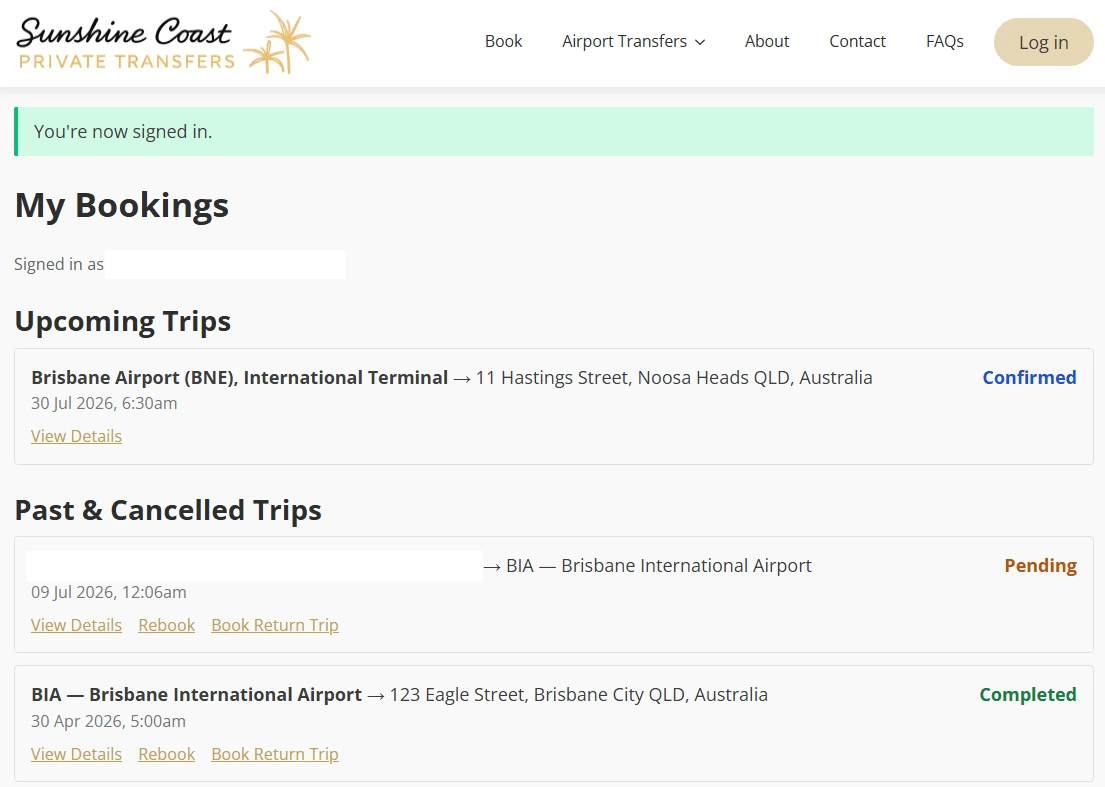
Customer dashboard listing upcoming, past and cancelled trips with statuses and rebooking actions, personal details removed
The customer dashboard: upcoming and past trips
Access your bookings screen requesting an email address to send a secure sign-in link
Passwordless access: customers request a secure sign-in link
Confirmation screen telling the customer a secure access link has been emailed and is valid for one hour
The emailed link signs them in; it expires after an hour

Communications, invoicing and payouts

Communications send themselves across the journey: confirmations, reminders and day-of details, with review requests following the trip. Account invoicing and driver payouts settle from the same booking data, entered once at the point of booking. That is the difference between a website with a booking form and an operating platform.
WORKFLOW

How the booking and operational workflow connects

01
Booking priced online
Distance, time and vehicle set the fare instantly
02
Paid or on account
Card in the flow, or invoicing for business clients
03
Vehicle and driver scheduled
Allocated with clashes caught early
04
Driver sees the job
Route, flight, passengers and notes in the portal
05
Customer kept informed
Confirmations, reminders and updates send themselves
06
Settled without retyping
Invoices for accounts, payouts calculated per job

The operational outcome

Several days
of manual administration removed each week
Estimated by the owner
One entry
at the point of booking
Everything downstream follows from it
Lower risk
of missed information
Communications send themselves; schedules are visible rather than remembered
The owner estimates that the system removes several days of manual administration each week. Just as importantly, the risk of missed information has fallen: communications send themselves, schedules are visible rather than remembered, and every job carries its own details to the person doing it. The business no longer depends on the owner relaying information for it to function, which is what owner independence actually means in practice.
Growth is now configuration rather than coordination: new vehicles, drivers and service types are added in the platform, and the same machinery carries them. The operating data the platform accumulates also gives the business a factual basis for pricing and capacity decisions.
RELATED

Jobs, vehicles, people and payments in one system

If your operation runs on jobs and resources, describe a normal week to us. We will show you what that week looks like on a platform built for it.